




The Architect of the Modern Big Band: Glenn Miller
By: Jeff Peckham
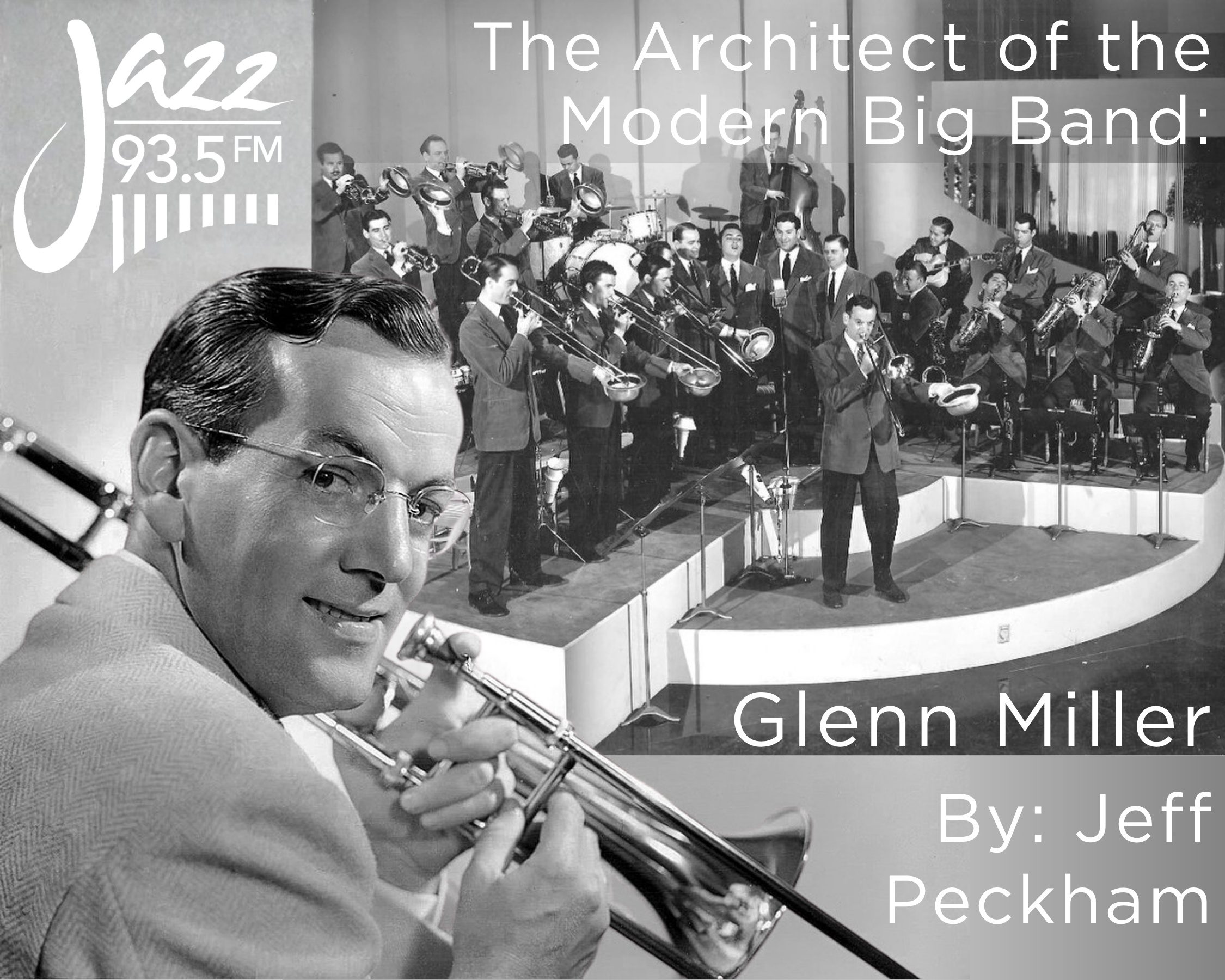
While the 1930s and 40s were defined by the “King of Swing” Benny Goodman and the sophistication of Duke Ellington, no musician captured the American zeitgeist quite like Glenn Miller. His signature “Miller Sound”—characterized by a clarinet-led reed section—became the literal soundtrack to the World War II era, bridging the gap between jazz art and popular appeal.
Early Life and the Search for a Sound
Born Alton Glenn Miller in 1904 in Clarinda, Iowa, his journey wasn’t an overnight success. He was a journeyman trombonist and arranger for years, working with titans like Tommy Dorsey and Benny Goodman. Miller was famously disciplined, often described as more of a businessman-musician than a wild improviser.
After several failed attempts to launch his own band, he struck gold in 1939. He discovered that by having a clarinet play the melodic lead over four saxophones, he created a lush, instantly recognizable texture. This wasn’t just music; it was branding.
Seminal Recordings and Concerts
Miller’s discography is a hit parade of the Swing Era. Between 1939 and 1942, he dominated the charts with an efficiency that remains staggering.
“In the Mood” (1939): Perhaps the most famous swing instrumental in history, known for its repetitive, infectious “riff” and the famous “fade-out/fade-in” trick.
“Moonlight Serenade”: The band’s theme song, showcasing the dreamy, clarinet-led reed voicing.
“Chattanooga Choo Choo”: The first recording ever to be awarded a Gold Record (selling over 1.2 million copies).
His residency at the Glen Island Casino in 1939 was the turning point. Nightly radio broadcasts from the venue beamed his music into homes across America, cementing his status as a national icon.
The Ultimate Sacrifice and Anecdotes
At the peak of his fame in 1942, Miller did the unthinkable: he disbanded his lucrative civilian orchestra to join the war effort. He joined the Army Air Forces, eventually forming the Army Air Force Band. Miller’s goal was to bring a “touch of home” to the troops, modernized through jazz.
A famous anecdote highlights his dedication: General “Hap” Arnold once asked Miller if he could modernize the military marches. Miller responded by turning “St. Louis Blues” into a march, much to the chagrin of traditionalists but to the delight of the GIs.
Miller’s life ended in mystery. In December 1944, his plane disappeared over the English Channel while he was traveling to Paris to play for liberated troops. He was never found, turning him into a martyr of the “Greatest Generation.”
Legacy and Impact on Jazz
Glenn Miller is often debated by jazz purists. Critics sometimes dismissed his music as “too commercial” or “too tight,” lacking the raw improvisation found in Count Basie’s band. However, Miller’s impact on jazz orchestration is undeniable. He proved that jazz could be meticulously arranged and still swing.
He professionalized the big band, demanding punctuality, matching uniforms, and technical perfection. His influence persists in “ghost bands” that still tour today and in the way modern pop music uses branding and sonic signatures to achieve global reach. Miller didn’t just play jazz; he synchronized it with the heart of a nation.
Author’s Postscript:
In 1986, I met Glenn Miller’s sister-in-law. I had several opportunities to talk with her, and she showed me scrapbooks of news clippings, hand-written letters to the family, and handbills from different performances. One thing she told me, and she stuck to this story as long as I knew her: she told me that the family never believed that Miller was killed in the plane disappearance/crash. She said that Miller told the family that he was so tired of the fame that he would love to vanish somewhere on a deserted island. Because there was no evidence to the contrary, that is what the family thought happened.