




Brahms’ Symphony of Future Past
By: Dave Carty
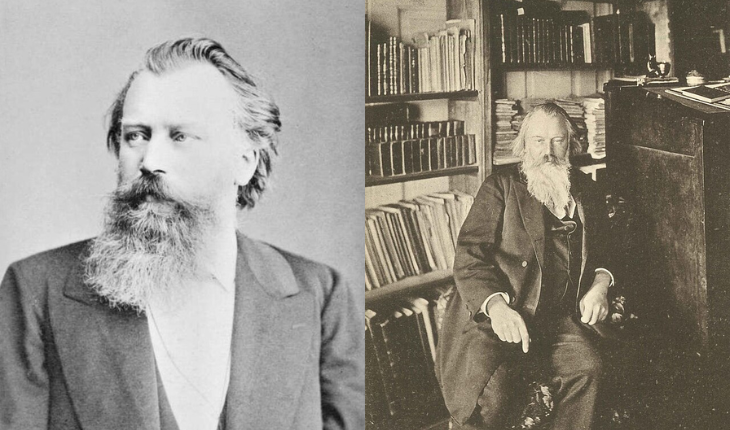
For the past few weeks, I’ve had one of my favorite symphonies buzzing around in my head: the Symphony No. 4 in E minor by Johannes Brahms. In his day people tended to fall into one of two groups: either a claque that admired Brahms’ music as the stalwart defender of the classical tradition standing on the granitic shoulders of Beethoven – or you were in the claque that followed that maniac Richard Wagner who wanted to drown music in emotions that may lead to heaven-knows-what-all. All this controversy was stoked by music critics who, fortunately, no longer have the influence they once had.
Many years later, another controversial composer – Arnold Schoenberg – wrote a famous essay where he laid out the idea that Brahms was the opposite of a traditionalist and that his music was actually forward-looking. He had rather an ulterior motive with that essay in that he was trying to set himself up as the natural heir to Brahms, with his new method of composition (often called 12-Tone or atonal). While I don’t think Schoenberg makes his case for 12-Tone music, I do think he is not far off in saying that Brahms’ music – and particularly his E minor Symphony – is forward-looking.
Critic David Hurwitz once wrote something to the effect that all art is to some extent a reinterpretation of the art of the past and it becomes visionary when that interpretation is fresh and makes what is old seem new – and that Brahms’ Fourth Symphony fits that mold. Each movement of the symphony either strikes new ground or takes a form from the past and recasts it into something that hadn’t quite been done before. I suppose this allows both the traditionalists and futurists to have their musical cake and eat it, too. The first and final movements in particular have a foot in both worlds. The symphony begins rather quietly – something that absolutely bucked the status quo as most symphonies were expected to begin (and end) with a bang. Yet Beethoven led the way here with his ninth symphony. Brahms takes the idea and gives it a fresh approach by bucking tradition and, instead of using typical sonata-allegro form, instead builds the movement around a two-note theme that opens the symphony and which he develops repeatedly into the climax of the movement. The fourth movement is again firmly in both the past and future as it is based on the Baroque Passacaglia form, something that hadn’t been done in a Romantic symphony but that would lead others to follow Brahm’s example, and Brahms gives it the full force of Romantic sturm und drang to end his symphony with the bang we expect and love.
I invite you to experience the “future past” (with apologies to the Moody Blues) of Brahms’ Symphony No. 4 with me during the 9:00 hour on Tuesday, March 31. And if you can’t listen in that day, do yourself a favor and put on your favorite recording of Brahms’ Fourth and I hope you find you can’t get it out of your head!