




A Mozart Birthday Serenade
By: Pam DeVier
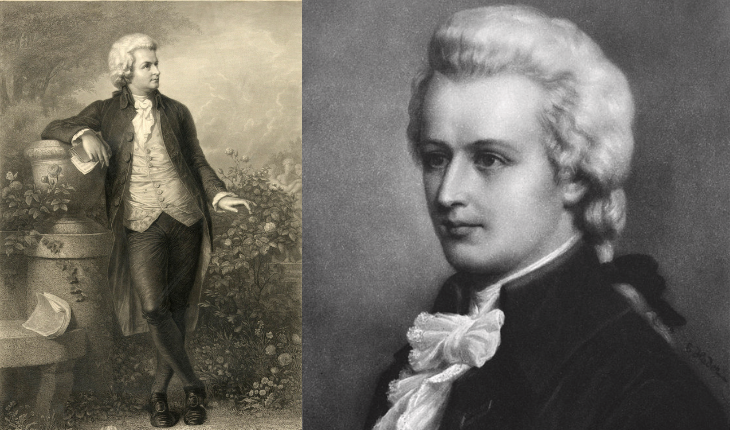
January 1776. Mozart turns 20 years old on the 27th and composes his Serenade No. 6 in D major, K. 239, better known as his Serenata notturna, a redundant title scribbled on the original manuscript in his father’s hand. While the United States was on the brink of declaring its independence, Mozart was writing this clever little piece for strings, divided into two groups, with timpani. It is one of Mozart’s most enchanting early works.
The terms serenade, divertimento, and notturno were pretty much synonymous in the late 18th-century, describing lighthearted music written for an evening’s entertainment, usually to accompany gatherings or celebrations. Listening to Mozart’s Serenata notturna, it’s obvious that he was incapable of writing lousy music, even inconsequential party music. This is a work that looks both forward and backward – forward, as his independent, sensitive, and imaginative compositional voice is heard loud and clear (and yes, cheeky as well), and backward, to the concerto grosso, not in form or content, but in instrumentation with strings divided into two groups, a ‘concertino’ of two violins, viola and violone (or double bass) set against a ‘ripieno’ of violins, violas, and cellos with timpani. In three movements, Marcia (maestoso), Menuetto, and Rondeau (allegretto, adagio, allegro), Mozart teases us with mischievous variety, ranging from timpani solos to the solo group alone, to witty exchanges between the soloists and his little ensemble.
Serenades and divertimenti were often grand affairs, sometimes an hour in length, with 5, 6, or even 7 movements and involving as large an orchestra as possible. A few months later in his Haffner Serenade, Mozart assembled flutes, oboes, bassoons, horns, and trumpets for a friend’s wedding: a grand affair indeed! Why Mozart chose this unlikely, intimate combination is a mystery on which we can only speculate. But with timpani, solo bass, and humorous interpolations, perhaps to Mozart it was nothing more than a musical joke run riot for a private party, maybe even a birthday party. No matter the reason, in 15 short minutes, with wildly diverse musical colors, Mozart paints us an enchanted evening with this earlier, ‘other’ Little Night Music.
Cheers, Wolfgang, and happy birthday!