




Al Jarreau
By: Jeff Peckham
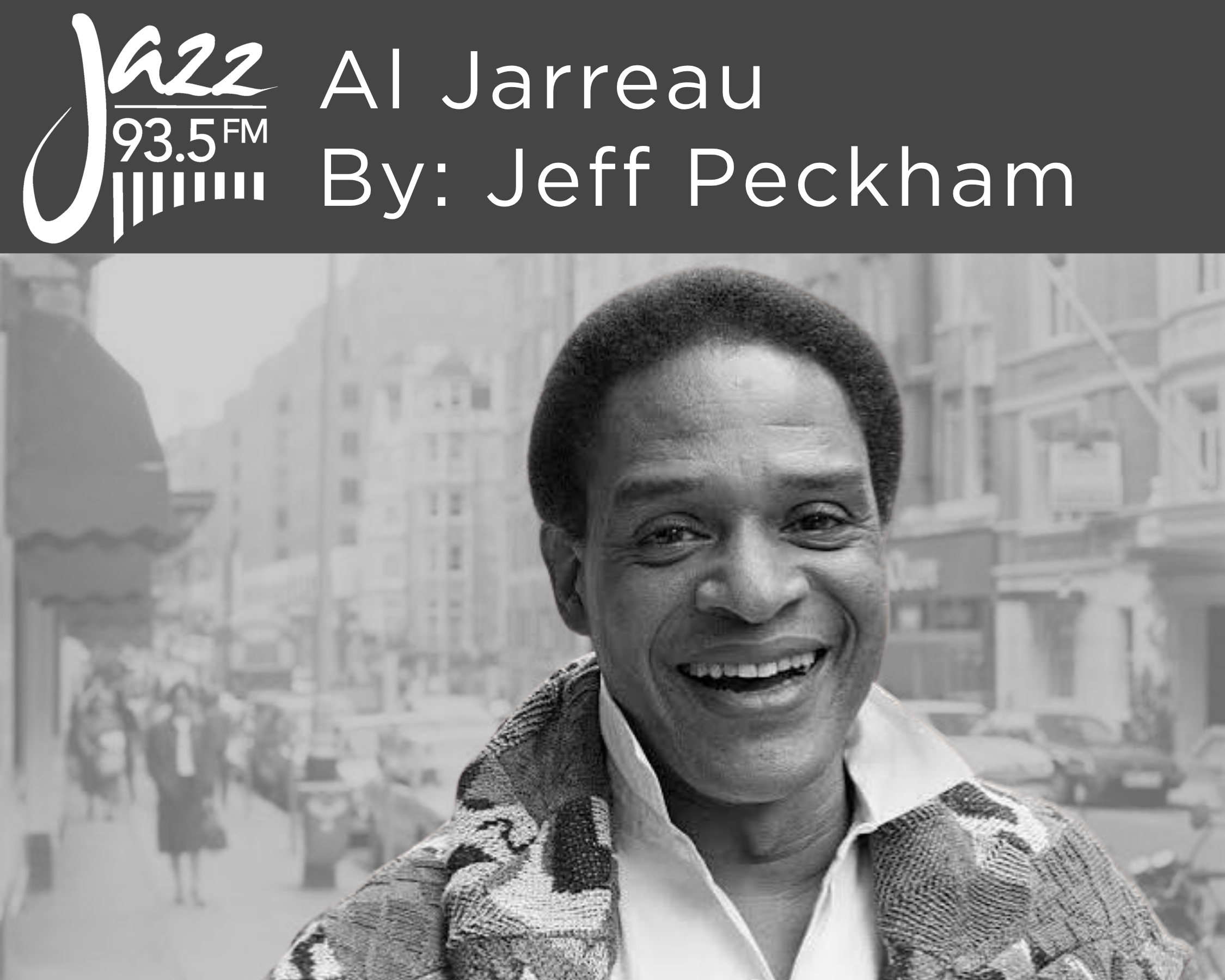
Al Jarreau was a virtuoso vocalist who redefined the boundaries of jazz, pop, and R&B. Over a career spanning five decades, his unique vocal style and elastic range earned him international acclaim. He remains the only artist to win Grammy Awards in three separate categories: jazz, pop, and R&B.
Born Alwin Lopez Jarreau on March 12, 1940, in Milwaukee, Wisconsin, music was part of his life from the beginning. His father was a minister and singer, and his mother played the church piano. Jarreau sang in church choirs from a young age, but he did not immediately pursue music as a career. He attended Ripon College, earning a bachelor’s degree in psychology, followed by a master’s degree in vocational rehabilitation from the University of Iowa. He moved to San Francisco to work as a rehabilitation counselor. However, the pull of the city’s jazz scene proved irresistible. He began performing in small clubs, eventually forming a trio with acoustic guitarist Julio Martinez. By the late 1960s, Jarreau committed to music full-time, moving to Los Angeles and catching the attention of Warner Bros. Records.
Jarreau released his debut album, We Got By, in 1975 at the age of 35. The album received widespread critical praise for its sophisticated blend of jazz and soul. His commercial breakthrough came with the 1977 live album Look to the Rainbow, which won his first Grammy Award for Best Jazz Vocal Performance. His 1981 album Breakin’ Away became a massive crossover success, featuring the hit singles “We’re in This Love Together” and the theme song to the television show Moonlighting. Another defining moment came in 1985 when he participated in the historic “We Are the World” charity single, singing a prominent solo line alongside the biggest stars of the era.
Throughout his career, Jarreau collaborated with an array of musical icons. He worked closely with keyboardist and producer George Duke, guitarist George Benson, and conductor Quincy Jones. His versatility allowed him to fit into any musical setting, from small acoustic jazz trios to massive pop productions.
Jarreau’s impact on vocal jazz was revolutionary. He treated his voice as a flexible instrument rather than just a vehicle for lyrics. He popularized a modern form of scat singing that incorporated complex rhythmic patterns and vocal percussion. His ability to mimic musical instruments—such as a muted trumpet, a flute, or a bass guitar—expanded the vocabulary of jazz singing. He bridged the gap between traditional jazz phrasing and the grooves of contemporary R&B, inspiring generations of vocalists like Bobby McFerrin and D’Angelo.
Al Jarreau passed away on February 12, 2017, just days after announcing his retirement from touring. He left behind a legacy of joy, technical mastery, and generic fluidity that permanently altered the landscape of American popular music.