





The Village Vanguard
By: Jeff Peckham
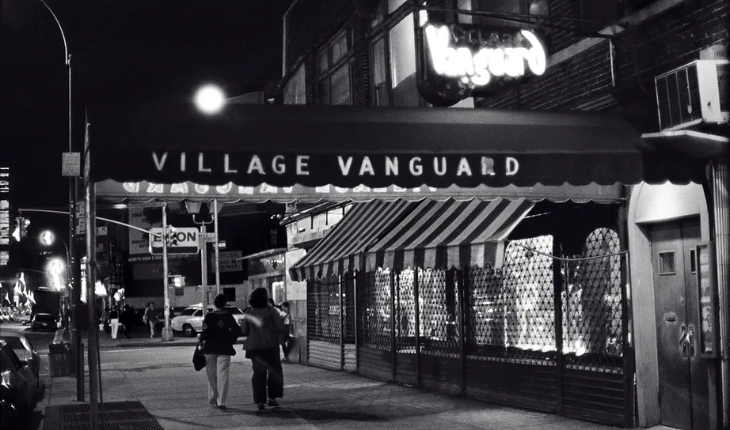
The Village Vanguard, a venerable institution nestled in the basement of 178 Seventh Avenue South in New York City’s Greenwich Village, stands as a living testament to the evolution and enduring spirit of American music, particularly jazz. Opened in 1935 by Max Gordon, the club initially showcased a diverse range of acts, from poets and folk singers to comedians and cabaret performers. However, it was in 1957 that the Vanguard fully embraced its destiny, dedicating itself exclusively to jazz, a decision that would cement its legendary status.
The soul of the Village Vanguard has been inextricably linked to the Gordon family. Max Gordon, a shrewd and passionate impresario, ran the club until his death in 1989. His vision for a venue that fostered artistic expression and provided a platform for both established and emerging talent defined its early years. Max’s autobiography, “Live at the Village Vanguard,” offers a colorful account of his journey into the club business, highlighting his dedication to creating a space where creativity could flourish.
Upon Max’s passing, his wife, Lorraine Gordon, took the reins. A jazz aficionado in her own right and a force of nature, Lorraine continued her husband’s legacy with unwavering commitment for nearly three decades, until her death in 2018 at the age of 95. It was under her steadfast leadership that the Vanguard truly solidified its reputation as a sacred space for jazz. Today, the club remains a family affair, with their daughter, Deborah Gordon, now at the helm, ensuring the Vanguard’s unique character and dedication to live jazz endure.
The intimate, wedge-shaped room of the Village Vanguard, renowned for its exceptional acoustics, has served as the backdrop for countless iconic jazz performances and recordings, many of which are considered masterpieces. The tradition of live recordings at the Vanguard began in earnest with Sonny Rollins’ groundbreaking A Night at the Village Vanguard (1957), an album that showcased his innovative saxophone-bass-drums trio format and became a cornerstone of the hard bop movement.
Perhaps the two most celebrated engagements in the club’s history took place in 1961: Bill Evans’ transformative Sunday at the Village Vanguard and Waltz for Debby, recorded just days before the tragic death of his bassist Scott LaFaro, and John Coltrane’s searing Live! at the Village Vanguard. These recordings captured raw, spontaneous brilliance and profoundly influenced the course of jazz. Other notable albums recorded live at the Vanguard include those by Dexter Gordon, Art Pepper, Tommy Flanagan, Wynton Marsalis (whose seven-disc Live at the Vanguard documents multiple engagements in the early 1990s), and the venerable Vanguard Jazz Orchestra, which has held the coveted Monday night slot since 1966 (originally as the Thad Jones/Mel Lewis Orchestra).
Two Anecdotes from the Vanguard’s Lore
- The Thelonious Monk Engagement: In the late 1940s, before her marriage to Max, Lorraine Gordon (then Lorraine Lion, married to Blue Note Records co-founder Alfred Lion) was instrumental in securing Thelonious Monk an engagement at the Vanguard. Monk, known for his eccentricities, was still struggling for wider recognition. Lorraine, a true believer in his genius, tirelessly advocated for him. This early booking helped establish a crucial relationship between Monk and the club, foreshadowing his eventual legendary status.
- Max Gordon’s Unwavering Presence: Max Gordon was known for his constant presence at the club, often holding court in the “kitchen” (a small back room that served as his office). Even in his eighties, he was a fixture. One memorable anecdote recounts how, in his later years, he once tumbled down the entire length of the club’s notoriously steep entrance stairs. Rather than being flustered or seeking immediate medical attention, the tough old proprietor simply picked himself up, sat at his usual table near the door with his overcoat still on, and continued to oversee the evening’s proceedings, a testament to his indomitable spirit and dedication.
The Village Vanguard’s significance extends far beyond its musical output. It represents a bastion of artistic integrity, a place where musicians can push boundaries and connect with audiences in an intimate setting. Its no-frills, music-first approach has resisted the commercial pressures that have seen many other legendary venues fall. The club’s continued operation under the same family ownership for nearly 90 years is a remarkable feat in the ephemeral world of New York nightlife. The Vanguard’s legacy is one of unwavering commitment to jazz, providing a vital stage for generations of musicians and serving as a cherished sanctuary where the magic of live improvisation continues to unfold night after night.