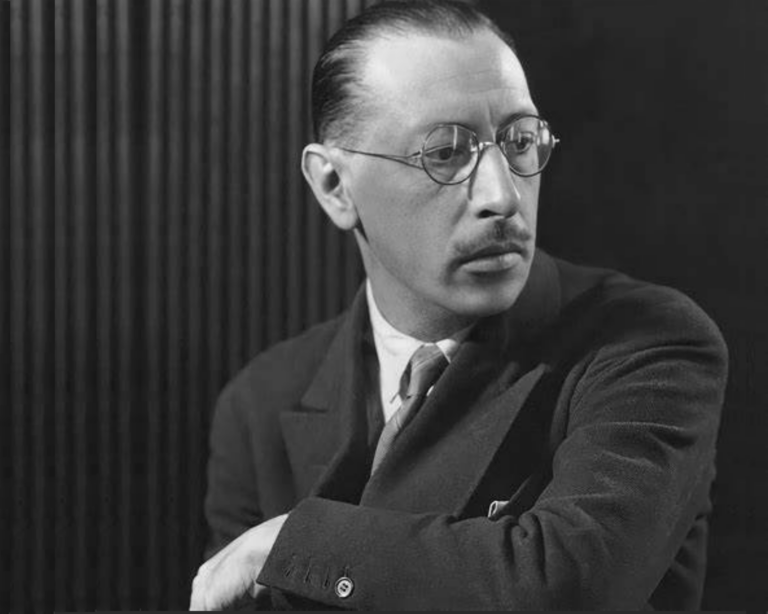





Jack DeJohnette

By: JJ Sechan

310 words
1–2 minutes

Sadly, October saw the loss of several legendary musicians who have shaped the fabric of American music, including bassist Anthony Jackson and singer/multi-instrumentalist D’Angelo. However, today I want to mark the passing of Jack DeJohnette, whose inimitable drumming kicked off the fusion genre and redefined the role of a drummer as an artist who deals in color as much as time.

Mr. DeJohnette’s international career as a drummer began in the 1960’s as a member of the Charles Lloyd quartet, where he would incorporate the rhythms of R&B and rock music into a more traditional quartet configuration. This expansion of genre drew the attention of Miles Davis, who recruited DeJohnette to his band for the 1969 album, Bitches Brew, which codified a Jazz-Rock genre. Mr. DeJohnette went on to lead his own projects that further expanded into avant-garde and fusion styles, including New Directions (1978) and Special Edition (1979), all while delivering inspirationally funky drumming that often left the rigidity of a strict beat pattern.

“I’m like a colorist on the drums,” DeJohnette said in a 2015 video interview, “So I can work within time, but I can also be free of it, more elastic in that sense.” Perhaps his vision of a drummer as a sound painter came from his upbringing as a pianist. In the same way that pianists use agogic patterns to subtly alter time, Jack DeJohnette subtly altered rhythmic grids to create nuance and depth. This can be heard on the recording “Willie Nelson (Remake Take 2)” from the Miles Davis album The Complete Jack Johnson Sessions. For another dimension to Jack DeJohnette, I highly recommend checking out his piano album, fittingly titled, The Jack DeJohnette Piano Album.

All recordings and albums I’ve mentioned are available for free listening on YouTube, and I highly recommend falling down the oh-so-funky Jack DeJohnette rabbit hole, to celebrate this visionary musician!
Similar Posts

  • A Mozart Birthday Serenade

    By: Pam DeVier January 1776. Mozart turns 20 years old on the 27th and composes his Serenade No. 6 in D major, K. 239, better known as his Serenata notturna, a redundant title scribbled on the original manuscript in his father’s hand. While the United States was on the brink of declaring its independence, Mozart was…

  • Brahms’ Symphony of Future Past

    By: Dave Carty For the past few weeks, I’ve had one of my favorite symphonies buzzing around in my head: the Symphony No. 4 in E minor by Johannes Brahms. In his day people tended to fall into one of two groups: either a claque that admired Brahms’ music as the stalwart defender of the…

  • Stravinsky and Neoclassicism

    By: JJ Sechan From Impressionist works to Tone Poems and Serial pieces, there are a lot of nitpicky words used to describe classical music, and today we dive into the nitpicky-est one, Neoclassicism. As with many 20th century musical innovations, we have Igor Stravinsky to thank for this multi-syllabic monstrosity. After attaining celebrity status with the…

  • Third Stream Music — The Hybrid Intruder

    By: Michael Skattebo Fusion in art often divides as much as it inspires. What some welcome as innovation, others see as an existential threat to tradition. It was with this tension in mind that American composer Gunther Schuller coined the term Third Stream — the merging of jazz and classical currents into a new musical…

  • Melba Liston

    By: Jeff Peckham Melba Liston (1926–1999) was a titan of jazz whose contributions as a trombonist, composer, and arranger fundamentally reshaped the sound of the big band era and beyond. As the first woman to hold a chair in several of the world’s most prestigious jazz orchestras, she broke formidable gender and racial barriers, proving…

  • Ron Carter: A Lifelong Impact on Jazz

    By: Jeff Peckham Ron Carter, born on May 19, 1937, in Ferndale, Michigan, is one of the most influential and prolific double bassists in the history of jazz. Known for his virtuosic technique, innovative approach to harmony, and lyrical playing style, Carter has left an indelible mark on the genre, spanning over six decades. Early…

Leave a Reply

Your email address will not be published. Required fields are marked *