




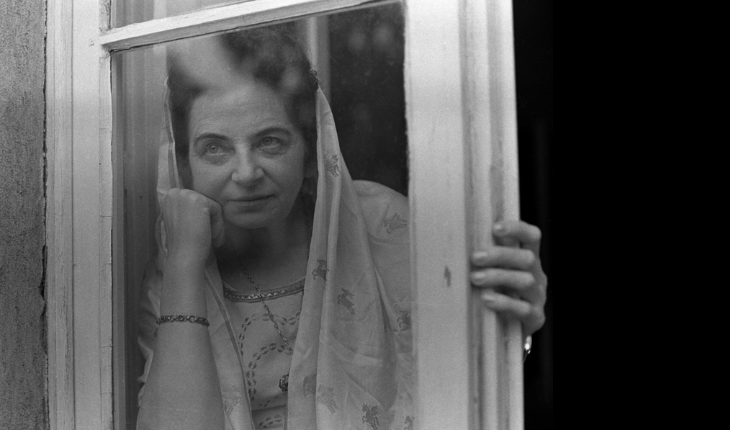
Grażyna Bacewicz: Form and Fire
By: Pam DeVier
For me, the work of composing is like sculpting a stone, not like transmitting the sounds of imagination or inspiration.
Grażyna Bacewicz, October 23, 1958
A virtuoso violinist, pianist, and prolific composer, Grażyna Bacewicz (pronounced grah-ZHEE-nah baht-SEH-vich) rejected the romanticized idea of the composer as a passive conduit. A student of both music and philosophy, she embraced determinism, believing that creative ideas emerge only through diligent work and technical discipline. In her many letters and writings, she emphasized form, structure, and craftsmanship. Like a sculptor shaping stone, Bacewicz shaped her creative output through methodical refinement and conscious artistic choices. The result: highly structured works of intense rhythms, bold contrasts, and percussive energy.
Born on February 5, 1909, in Łódź, Poland, to a musical and close-knit family, Bacewicz was encouraged to study music from a very early age. Her father was her first teacher, and she took to the violin immediately. After graduating summa cum laude from the Warsaw Academy in 1932, she went to Paris to study composition with Nadia Boulanger, on the recommendation of Karol Szymanowski and with the financial support of Ignaz Paderewski. She had a brilliant international career as a solo violinist, frequently performing her own works. In 1936, she accepted the position of principal violinist for the Polish Radio Orchestra and toured with them for several years. As World War II erupted, she lived in occupied Warsaw, giving secret underground concerts, eventually escaping with her family after the 1944 Warsaw uprising. A serious car accident in 1954 forced her to give up performing and make composing her sole occupation.
By the time of her sudden and unexpected death on January 17, 1969, Bacewicz had produced over 200 compositions, including four symphonies, seven violin concertos, seven string quartets, five sonatas for violin and piano, concertos for piano, two pianos, viola and cello, two piano quintets, and numerous other solo, chamber, and orchestral works. Her catalogue reflects a fiery spirit, an artist of fierce intensity equally comfortable with neoclassicism, Polish folk idioms, and avant-garde techniques.
Widely respected by her peers and beloved by audiences, Bacewicz was personally known for her integrity, compassion, and generosity. She played a vital role in shaping Polish musical culture and promoting it internationally.
Composer Witold Lutosławski wrote after her death: “Grażyna Bacewicz’s premature departure has been an irreconcilable loss. The intensity of her activities was so great that she managed, in a cruelly shortened life, to give birth to such treasures that any composer of her stature with a considerably longer life span could only envy”.
Recommended works to listen for on KCME include her Concerto for Strings, Oberek No. 2 for violin and piano, the Overture for Orchestra, Partita for violin and piano, and the Concerto for Piano.